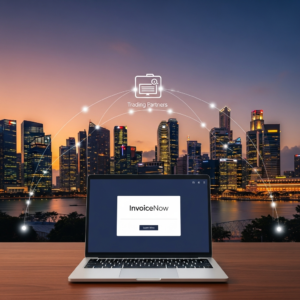
Singapore’s digital invoicing landscape is moving toward faster, more accurate, and more secure exchange of invoice data. At the center of this shift is the 5-corner model, a framework designed to support real-time transmission of invoice information through the InvoiceNow network. For businesses, this means fewer manual processes, better data accuracy, and a smoother path toward digital compliance. The model also supports the use of structured invoice formats that help standardise how business documents are created, sent, and received. In this article, we explain how the 5-corner model works, why it matters for businesses operating in Singapore, and what organisations should understand as they prepare for a more connected invoicing environment.
What the 5-Corner Model Means
The 5-corner model is a digital invoice exchange framework that connects businesses, their technology providers, and the national network used for invoice transmission. Instead of sending invoices as unstructured PDFs or manual documents, businesses can exchange standardised invoice data electronically in a secure and interoperable way.
The main participants
Each corner represents a key participant in the invoice flow. Together, they make it possible for invoice data to move efficiently from sender to recipient while supporting validation and delivery across the network.
-
Sender: the business issuing the invoice
-
Sender’s Access Point: the system used to transmit invoice data
-
Network: the trusted digital infrastructure that carries the document
-
Receiver’s Access Point: the system that receives the invoice
-
Receiver: the business receiving the invoice
Why it matters for digital invoicing
The model reduces manual handling, improves traceability, and supports better integration between accounting systems and invoicing workflows. It also helps businesses move closer to real-time digital exchange rather than relying on outdated document processing methods.
How Invoice Data Moves Across the Network
In the 5-corner model, invoice data is created in a structured format and transmitted through approved access points. This enables the sender and receiver to exchange information securely without needing to rely on email attachments or repeated data entry.
From invoice creation to delivery
Once an invoice is generated in the sender’s system, it is prepared in the required standard format and sent through an access point. The data is then delivered across the network to the recipient’s access point before reaching the receiving business system.
Key advantages of structured transmission
This approach gives businesses a more reliable invoicing process with fewer errors and stronger consistency across transactions.
-
Reduced manual data entry
-
Faster invoice processing
-
Improved data accuracy
-
Better audit visibility
-
More efficient internal workflows
Standardisation and Compliance in Singapore
Singapore’s invoice digitisation efforts rely on structured standards that support interoperability between different systems. A common format allows businesses to exchange invoice data more seamlessly while aligning with national digitalisation goals.
The role of invoice standards
Standards such as PINT-SG help ensure that invoice information is consistent and compatible across participating systems. This makes it easier for businesses of different sizes and sectors to adopt a common digital process.
Connection to continuous transaction controls
The broader shift toward continuous transaction controls in Singapore reflects a growing emphasis on real-time or near-real-time data exchange. For businesses, this means preparing systems and workflows that can support digital validation, traceability, and structured reporting.
What businesses should prepare for
To adapt effectively, organisations should review their invoicing processes and ensure their systems can handle structured data exchange. A few practical steps can help prepare for this transition.
-
Assess current invoice creation and approval workflows
-
Confirm ERP or accounting system compatibility
-
Adopt structured data formats where needed
-
Train teams on digital invoice handling
-
Work with a trusted access point provider
Building a More Connected Invoicing Future
The 5-corner model is more than a technical framework. It is part of a wider move toward smarter, more efficient business processes in Singapore. By enabling standardised invoice transmission, it helps companies improve accuracy, reduce delays, and modernise how they exchange financial information. For organisations looking to take the next step in their digitalisation journey, choosing the right partner is important. Sodainmind is an approved Access Point for InvoiceNow and we are ready to help companies in Singapore with their digitalisation journey. If you have any questions or would like to learn more, please contact us at info@sodainmind.com.